ServicesSiding
Siding Repair and Replacement in California, KY
Cracked, loose or faded siding rarely needs fixing this week, but it does need a plan. We look at your walls, check what is behind the panels and tell you what can wait, what should not, and roughly what each step will cost.
Siding That Keeps Water Out of Your Walls
Siding is the rain jacket for your home. When it works, you never think about it. When a panel cracks or a seam opens, water gets behind it and soaks the housewrap and sheathing, and that damage stays hidden until boards go soft or paint starts peeling inside.
We handle siding repair for a few damaged areas and full siding replacement when the old material has reached the end of its life. Because we are roofers first, we also look hard at the places where the roof meets the walls, which is where a lot of siding leaks actually start.
Our goal is to catch problems while they are still small and give you time to budget. If a repair will carry you a few more years, we say so and help you plan the bigger job for later.
What Our Siding Work Includes
- A close look behind the panels
- We pull a few pieces in suspect areas to check the housewrap and sheathing. Soft or stained wood tells us whether you have a surface problem or a wall problem.
- Panel and section repairs
- Cracked, warped or blown-off vinyl panels get replaced, and we try to match profile and color as closely as possible. When an exact match is gone, we talk through options like moving original panels from a less visible wall.
- Full replacement in vinyl or fiber cement
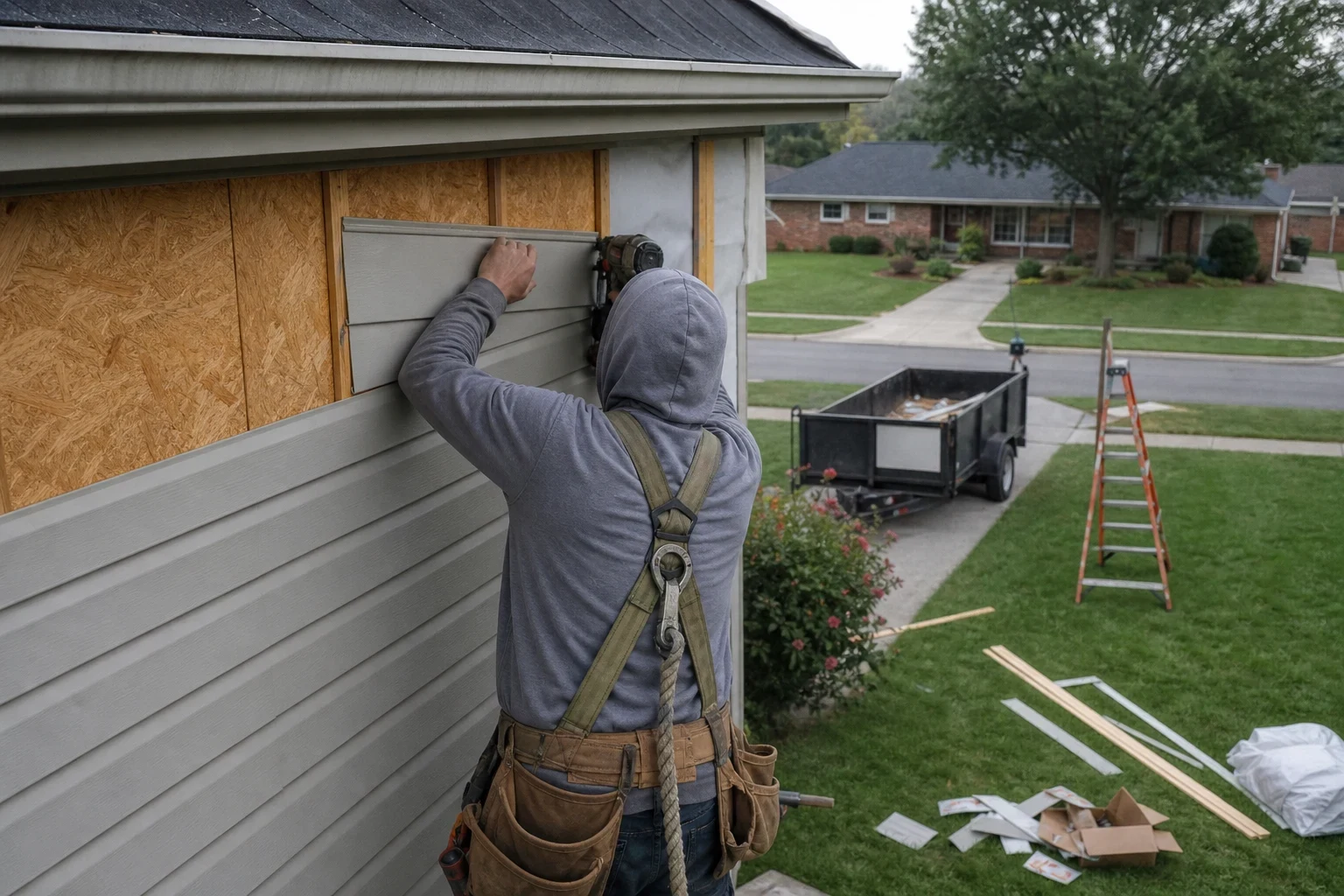
- We remove the old siding, repair damaged sheathing, install new housewrap and hang the new material with proper overlaps and nailing. Vinyl is hung loose enough to expand and contract, and fiber cement gets sealed cut edges.
- Flashing at windows, doors and roof lines
- New flashing and trim go around openings, and kickout flashing goes where a roof edge runs into a wall. That small piece keeps roof runoff from pouring straight into the siding.
- Daily cleanup
- Old panels, scraps and nails are picked up each day, and we run a magnet over the yard and driveway before we leave.
Signs Your Siding Needs Attention
Cracks and holes
Vinyl gets brittle in cold weather, so a stray ball, a trimmer or hail can crack it. Even a small split lets water in during the next rain.
Panels that are loose or wavy
Siding that rattles in the wind or bows outward was often nailed too tight or has come off its locks. Strong gusts can then peel off whole runs.
Soft spots or bubbling paint inside
Press on the siding near windows and corners. If it gives, or if paint is blistering on an inside wall, moisture may already be in the sheathing.
Heavy fading or chalky film
Color that wipes off on your hand means the surface has worn down. It is not urgent, but it is a good cue to start planning and saving for replacement.
Mold or stains under the roof edge
Dark streaks below a roof line or gutter often point to overflow or missing kickout flashing. We check the gutters and roof edge along with the wall.
What Shapes the Cost of Siding
No two siding jobs price the same, which is why we give you a written estimate after seeing your home. The biggest swings usually come from what we find under the old panels. Knowing the cost drivers early lets you plan the work for the season and budget that suit you.
Wall area and height
More square footage means more material and labor. Two-story walls and gables need extra staging and time.
Material choice
Vinyl generally costs less to buy and install. Fiber cement costs more up front, is heavier to handle and needs painting over time, but it stands up well to impact.
Condition of the sheathing
Sound sheathing keeps the job simple. Rotted boards have to be cut out and replaced before anything new goes on.
Trim and openings
Every window, door, corner and vent needs trim and flashing. A house with many openings takes longer than a plain rectangle.
Removing old layers
Some homes have siding over older siding. Taking off more than one layer adds labor and disposal.
How a Siding Job Runs
- 1
Free estimate at your home
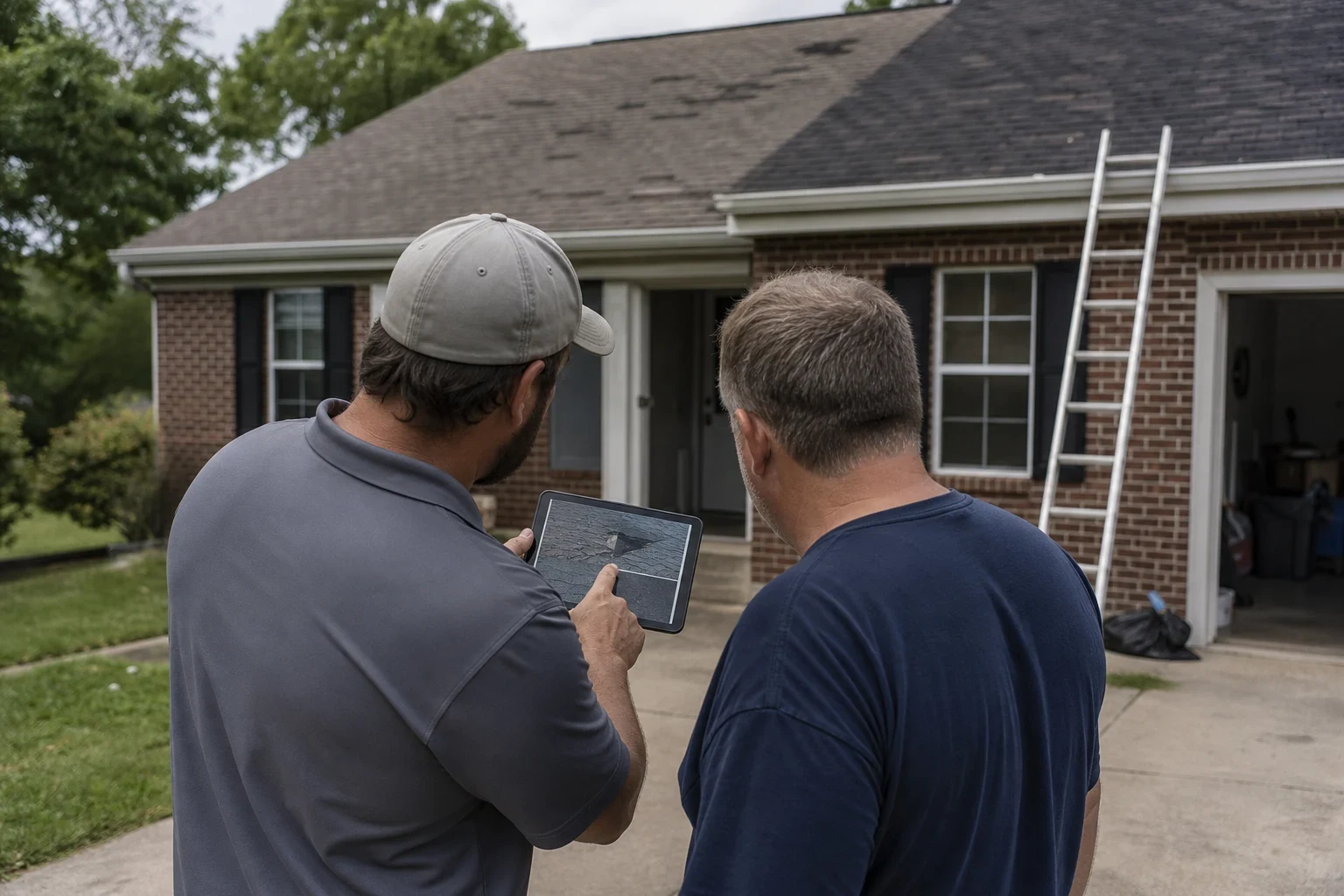
We walk every wall, open a few test spots and take photos. You see what we see, including any soft sheathing.
- 2
A written plan with options
You get a line-item estimate that separates must-do repairs from work that can wait. If you would rather spread the cost out, we can split the job into phases.
- 3
Prep and protection
Before work starts we check whether your project needs a permit and pull it if so. On the day, we cover plants near the walls and set ladders away from windows and walkways.
- 4
Tear-off, repair and install
We strip one section at a time so your walls are never left open overnight. Damaged sheathing is replaced, then wrap, flashing and siding go on.
- 5
Final walk-through
We walk the house with you, point out the new flashing and trim, and leave the yard clean.
Siding Questions We Hear Often
Can you match my existing siding for a small repair?
Often, yes. We bring samples and compare profile and color on site. Older siding may be discontinued or faded, so if a close match is not possible we can move original panels from a back wall to the front and put new ones where they show least.
Should I repair a few panels or replace all of it?
If the damage is limited and the walls behind it are dry, repair usually makes sense. When cracks keep showing up all over, the color is badly worn, or we find soft sheathing in several spots, replacement is often the better use of your money. We will tell you which one we would choose and why.
What time of year is best for siding work?
Spring through fall is easiest, and vinyl handles best when it is not freezing. Planning a few months ahead also gives you a better shot at the dates you want. Repairs that keep water out should not wait for perfect weather, though.
Hail damaged my siding. Will insurance cover it?
It depends on your policy, so your adjuster makes that call. We can photograph the damage and explain what we found so you have a clear record. Our Storm Damage Repair page covers how we help with roofs and siding after a storm.
Can you handle the gutters and roof edge at the same time?
Yes. Siding replacement is a good time to swap tired gutters or fix flashing at the roof line, since the trim is already open. See our Gutters page for more on that work.
Is there an offer for new customers?
Right now we have a Limited Time — $50 Off Your First Service Call. Mention it when you phone us and we will apply it.
Get Ahead of Your Siding Before It Gets Ahead of You
We will look at every wall, show you photos and give you a plan that fits your timing. The estimate costs nothing, and you decide what happens next.