ServicesRoof Replacement
Roof Replacement in California, KY, Planned on Your Timeline
A new roof is a big purchase, and it goes better when you see it coming. We inspect your roof for free, tell you honestly how much life is left, and help you plan the replacement for the season and budget that work for your home.
When a New Roof Is the Right Call
Most roofs give plenty of warning before they fail. Shingles lose their granules, edges curl, and small repairs start coming closer together. If we catch that stage early, you get to decide when the work happens instead of scrambling after water shows up on a ceiling.
We start every replacement conversation by checking whether a repair would still do the job. Sometimes it will, and we'll say so and point you to our roof repair service. When the roof is truly worn out, we show you photos of what we found, explain why patching no longer makes sense, and give you a written scope you can take time to think over.
Kentucky winters are hard on tired roofs. Repeated freezing and thawing pries at cracked shingles and loose flashing, so planning a replacement for spring, summer or early fall usually means better working weather and less stress for you.
What Your Roof Replacement Includes
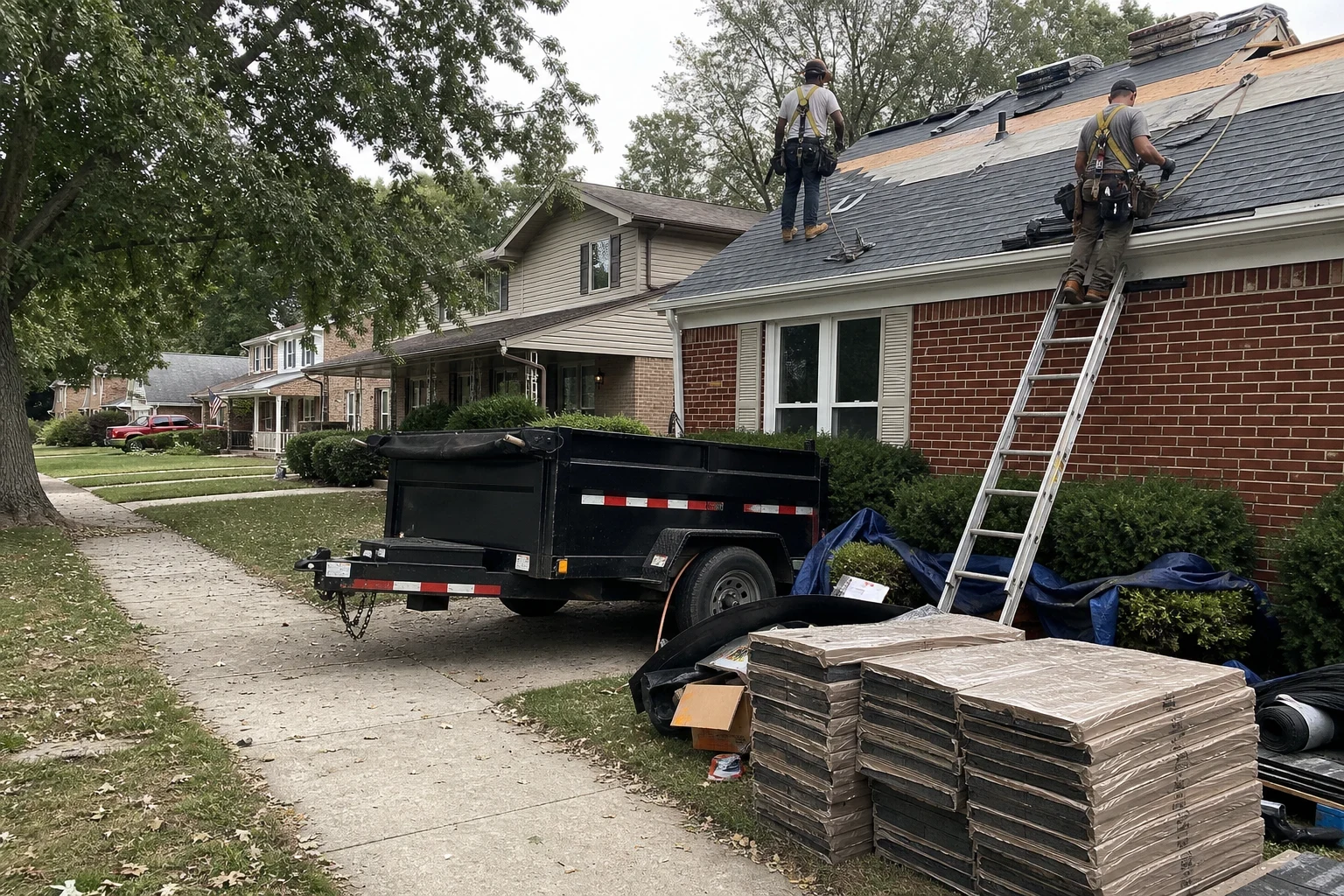
Full tear-off to the decking
We remove the old shingles and underlayment down to the wood. That is the only way to see the decking and fix problems before they get covered up again.
Decking check and repair
Soft, rotted or delaminated boards get replaced. We photograph what we find and talk with you before swapping more than the estimate covers, so nothing lands on your bill as a surprise.
Ice and water barrier plus underlayment
We install a self-sealing ice and water barrier along the eaves and in the valleys, where melting snow tends to back up, and synthetic underlayment across the rest of the roof.
New flashing, drip edge and pipe boots
Chimney and wall flashing, drip edge and the rubber boots around plumbing vents are replaced, not reused. Old boots crack and are a common leak source on otherwise sound roofs.
Ventilation that lets the attic breathe
We look at your intake and exhaust vents and recommend a ridge vent or other changes when the attic runs hot or damp. Good airflow helps shingles last and cuts down on winter ice buildup.
Yard protection and a walk-around
Landscaping close to the house gets covered with tarps before tear-off begins. When the roof is finished, we sweep the lawn, driveway and planting areas with a rolling magnet to collect stray nails, then walk the property with you and answer anything on your mind.
Signs Your Roof Has Reached the End
Shingle grit at the downspouts
When dark, sandy granules wash out of your downspouts or collect in the gutters, the shingles are losing their outer coating. Bare asphalt breaks down fast once sun and weather reach it.
Curling, cupping or cracked shingles
Shingle edges that lift or tabs that crack across the middle stop sealing properly. Wind gets under them, and so does rain.
Repairs that keep coming back
If you've patched different spots two or three years in a row, the roof as a whole is aging out. Putting that repair money toward a planned replacement often makes more sense.
A sagging roofline or soft spots
Dips along the ridge or spongy areas underfoot usually point to wet or failing decking. That needs a closer look soon.
Daylight or stains in the attic
Pinpoints of light through the boards, dark water marks on rafters or damp insulation tell you water or air is getting through where it shouldn't.
How a Replacement Comes Together
- 1
Free inspection and honest answer
We climb up, check the attic and take photos. Then we tell you whether you need a new roof now, in a year or two, or not yet.
- 2
Written scope and material choices
You get a line-by-line estimate covering tear-off, decking allowance, underlayment, flashing, ventilation and shingles. We go over shingle colors and styles with you so you can choose at your own pace.
- 3
Scheduling and permits
We pick a start date that works for you and pull any permit your local building office requires. You'll know ahead of time when materials arrive and when the crew shows up.
- 4
Work day
Most homes are torn off and roofed in one to two days, depending on size and weather. We protect your yard, keep the driveway clear when we can, and secure the roof at the end of each day.
- 5
A final look together
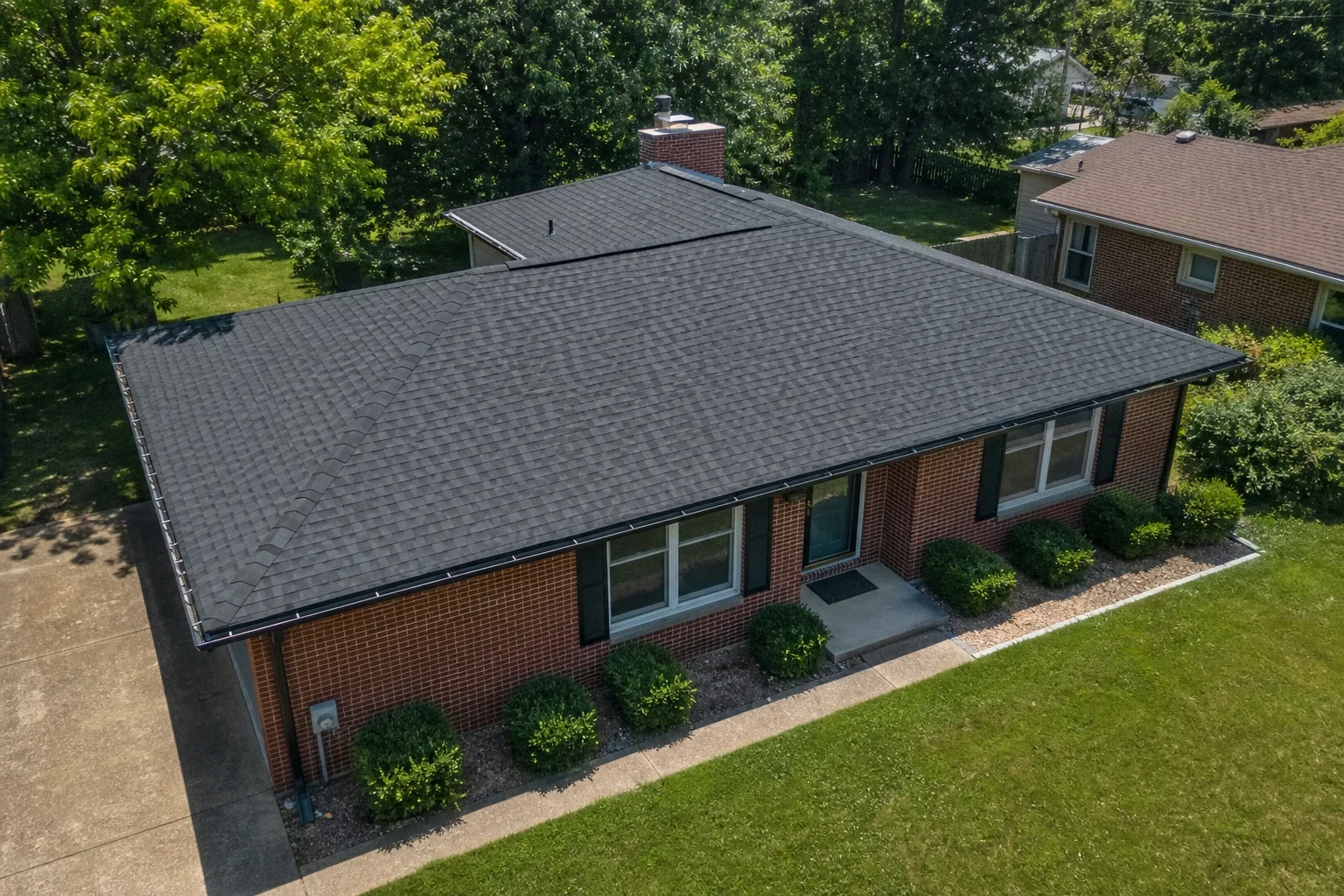
Once the last ridge cap is down, the crew hauls away old shingles and scraps and checks the ground for nails. Then we show you the new roof, including the fresh flashing and vents.
What Shapes the Cost of a New Roof
Every roof is priced on its own measurements and condition, so we don't quote numbers before we've seen yours. The good news about planning ahead is that you have time to compare options and set money aside. These are the things that move the price most.
- Roof area and steepness
- More square footage means more material to buy and more labor to install it. On a steep roof, the work goes slower and the crew needs added safety gear such as roof jacks and harnesses.
- Layers coming off
- A roof with two layers of old shingles takes more time to tear off and adds disposal weight.
- Decking condition
- Sound decking keeps costs down. Rotted boards found during tear-off are replaced at the rate written in your estimate, and we show you photos first.
- Material and extras
- Architectural shingles, upgraded underlayment, new ventilation or extra chimney and skylight flashing all affect the total.
- Access and timing
- Tight lots, detached garages and steep driveways can add labor. Booking ahead of the busy season gives you more flexibility on dates.
Roof Replacement Questions We Hear Often
Something not covered here? (859) 407-7419
Is it okay to roof right over the shingles I have now?
In most cases we advise against it. A second layer covers up soft decking and tired flashing, puts extra weight on the framing, and tends to wear out sooner. Stripping the roof down to the wood lets us fix what's underneath while it's still in plain view.
How do I know whether I need a repair or a full replacement?
We look at how widespread the wear is, the age of the shingles and how often the roof has needed fixes. If one area is damaged on an otherwise healthy roof, a repair is the honest answer. If the wear is everywhere, we'll explain why replacement saves you money over time.
My roof is okay for now. Can you help me plan for a replacement later?
Yes, and that's one of our favorite calls. After a free inspection we can give you a realistic window for replacement and a written estimate, so you can budget over the next year or two and pick the season that suits you.
Do I need to be home while you work?
No, you can go about your day. It helps if we can say hello when the crew arrives and go over the finished roof with you at the end. Please move cars out of the driveway and take fragile items off interior walls, since the hammering overhead can rattle things.
What happens if it rains during the job?
We watch the forecast closely and only open as much roof as we can dry back in that day. If weather moves in, the exposed areas are covered with underlayment and tarps until we can finish.
Will you handle the permit?
Yes. If your local building office requires a permit for a reroof, we pull it and schedule any inspection, and we let you know when it's done.
Get Ahead of Your Next Roof
A quick visit tells you how much time your roof has left and what a replacement would involve. We'll leave you with photos, honest advice and a plan you can budget around.