ServicesRoof Inspections
Roof Inspections in California, KY, So You Can Plan Before It Leaks
We climb up, look closely and show you what we see. You get photos, a straight read on your roof's condition and a sense of what it will need over the next few years, so repairs land in your budget instead of surprising it.
A Clear Picture of Your Roof, Before Anything Goes Wrong
Roofs rarely fail all at once. Water usually gets in through something minor, like a shingle the wind has lifted, a rubber vent collar that has split or flashing that has pulled loose. It can soak the wood for months before your ceiling shows a mark. An inspection finds those spots while the fix is still small and affordable.
We don't come out to sell you a roof. We come out to tell you where yours stands. Sometimes that means a short list of small fixes. Sometimes it means your roof has a few good years left and you can start setting money aside for a replacement on your own timeline.
Freeze-thaw winters are hard on shingles and flashing, so early fall and late spring are both good times for a look. We inspect roofs in California and nearby towns like Alexandria and Cold Spring.
What We Check During Your Inspection
- Shingles and surface
- We look for curling, cracking, missing tabs and bare spots where the granules have worn away. Granule loss tells us a lot about how much life the shingles have left.
- Flashing and roof openings
- Chimneys, skylights, vent pipes and the spots where the roof meets a wall give water its easiest way in. We look over the metal flashing, the sealant and the rubber boots around each one.
- Decking and soft spots
- Walking the roof lets us feel for give or sponginess underfoot. A soft area usually means the wood underneath has taken on water.
- Attic and ventilation
- When we can get into your attic, we look for daylight, water stains, damp insulation and signs of poor airflow. Trapped heat and moisture shorten a roof's life from the inside.
- Gutters and drainage
- We make sure your gutters hold tight to the fascia, tilt toward their outlets and aren't packed with leaves. Then we follow each downspout to see where the water ends up. Overflow at the roof edge can slowly rot fascia boards and the sheathing behind them.
- Photos and a written summary
- You see every problem we find in pictures. We sort the list into what needs work soon, what to watch and what is fine for now.
Signs It's Time to Have Your Roof Looked At
Your roof is past the 15-year mark
Asphalt shingles start to show their age around then. An inspection tells you whether you have years left or should start planning a replacement.
Stains on a ceiling or in the attic
Even a faint brown ring means water found a way in. The leak is often a few feet from where the stain appears.
Granules in the gutters
A little grit after a new roof is normal. When an older roof sheds it by the handful, the protective coating on the shingles is going and their remaining life is shrinking.
After a hard storm
High wind and hail can loosen or bruise shingles without leaving anything you'd notice from the yard. If damage turns up, our storm damage repair page explains the next steps.
Ice buildup along the edges
Heavy icicles or ice ridges at the eaves can point to attic heat loss and water working back under the shingles.
You're buying or selling a home
Knowing the roof's condition up front helps you negotiate fairly and avoid surprises after closing.
What It Costs, and What Shapes the Price of Any Work
The inspection itself is free, with no obligation to hire us for anything. If we find work worth doing, we write up a free estimate so you can see each item and decide what to tackle now and what to plan for later. These are the things that move that number.
How far the problem has spread
A cracked pipe boot caught early is a small job. The same leak left for a few seasons can mean replacing rotted decking and insulation too.
Roof size and steepness
Larger and steeper roofs take more material, more safety setup and more time on the job.
Materials and matching
Repairs need shingles that match your existing roof as closely as possible. Older or discontinued styles can take more effort to source.
Repair versus replacement
When repairs start stacking up on an aging roof, a roof replacement can be the better use of your money. We lay out both paths so you can compare them honestly.
How Your Inspection Visit Goes
- 1
A quick phone call
Tell us what you've noticed, or that you just want a checkup. We pick a time that works for you.
- 2
Outside and up top
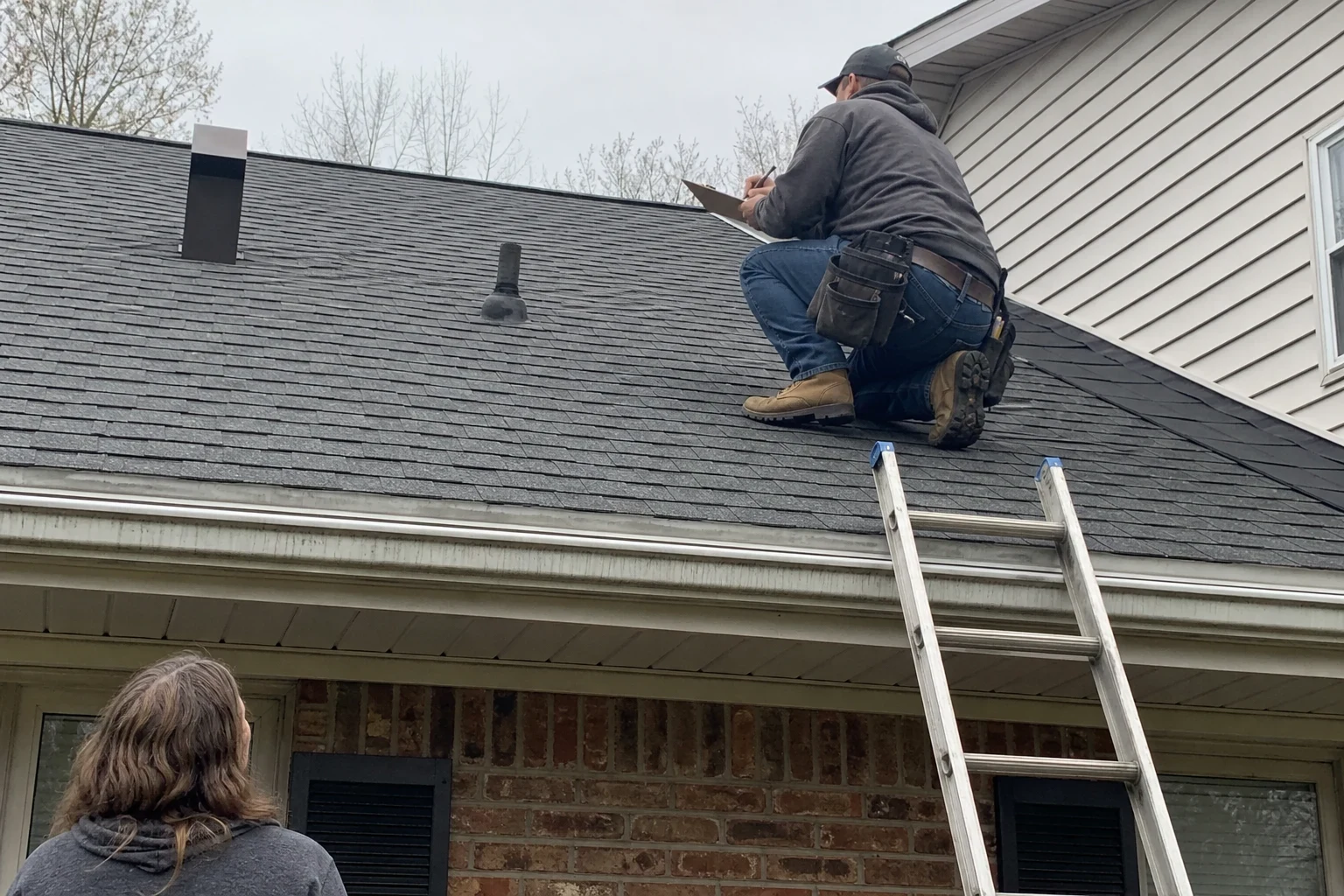
We look over your roof from the ground, then go up and walk it if the pitch and weather allow it safely. We take photos as we go.
- 3
A look in the attic
If you're home and the attic is reachable, we check the underside of the roof deck and the ventilation. It usually takes just a few minutes.
- 4
We go over it together
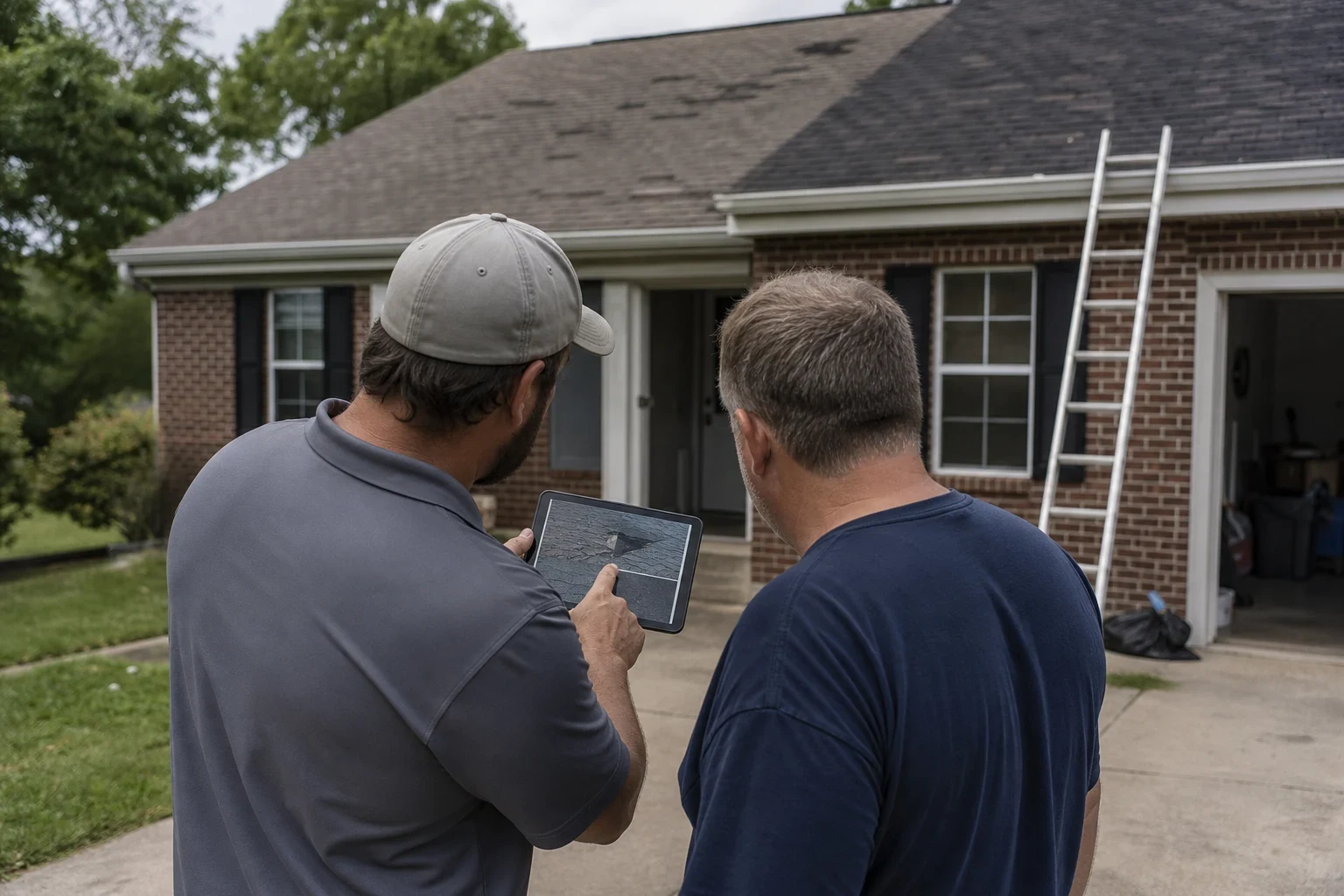
We sit down with you, show you the photos and explain what we found in everyday words. You leave with a clear list and a rough timeline.
- 5
Your call on what's next
If something needs fixing, we can give you a free estimate. If nothing does, you have a baseline to compare against next time.
Roof Inspection Questions
Is the inspection really free?
Yes. We come out, inspect your roof and go over what we found at no charge. You're under no obligation to book any work with us afterward.
How long does an inspection take?
Most take under an hour for a typical home. Larger roofs, steep pitches or a tricky attic can add some time. We'll give you a rough idea when you call.
Do I need to be home?
It helps, especially if you'd like us to check the attic and show you the photos face to face. If your schedule doesn't allow it, we can still look over the roof from outside, then phone you afterward to explain what we saw and what it means.
Will you just tell me I need a new roof?
Only if that's the honest answer. Many roofs need a few small repairs and some routine care, and we'll say so. When a roof is near the end of its life, we explain why and help you plan the timing so it doesn't catch you off guard.
When is a good time to schedule a checkup?
A yearly visit keeps you ahead of most problems, and early fall is a smart window before the first hard freeze. Add a look after any big wind or hail storm too. Checking on a steady rhythm lets you spread repair costs over several years rather than paying for everything at once.
Will walking on my roof damage it?
We walk carefully and step on the strongest parts of the roof. If a roof is too steep, too wet or too fragile to walk safely, we inspect it from a ladder and the eaves instead.
Know Where Your Roof Stands This Season
A free inspection gives you photos, a clear list and time to plan. Give us a ring and we'll find a time that suits you.